Your matches, watched properly

Youth football & soccer
video analysis.

You bring the footage. I help you see what is really happening on the pitch, and what to change. For players, parents and coaches.

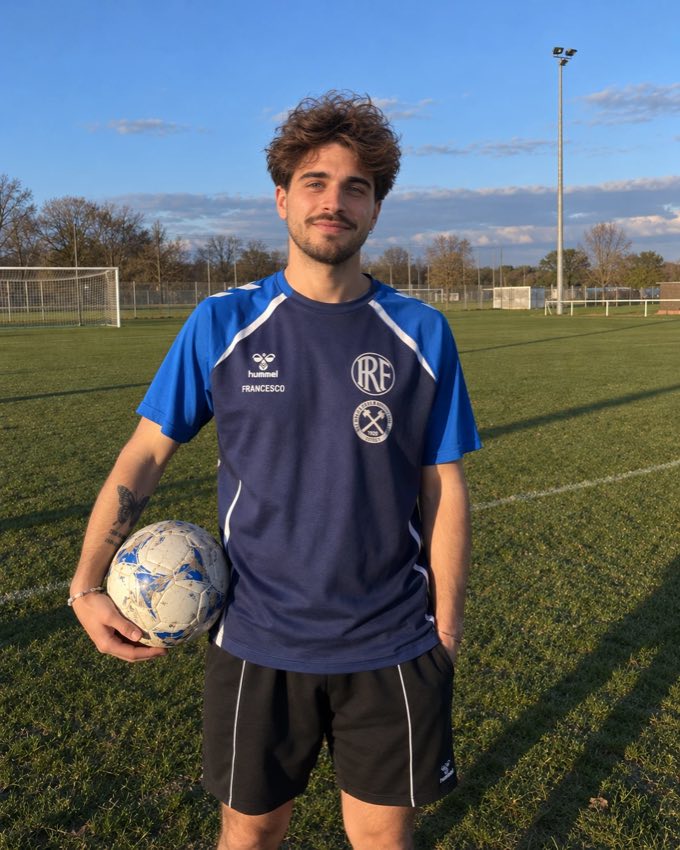
Francesco on the pitch, holding a ballPhoto
About

Francesco, youth football coach and video analyst.

Francesco is an Italian youth football coach. Since 2025 he has coached youth teams in Denmark, at Dybbøl/Rødekro, Sønderjylland Q, Sønderborg Academy and Starup.

His work starts from a written game model. Training sessions, match reports and player development plans all follow from it.

  • Assistant coach, Dybbøl/Rødekro, Sønderjylland Q and Sønderborg Academy, 2025–2026: planned and led training sessions, agreeing each plan with the head coach.
  • U14 development coach, Starup, September 2026: designed and delivered sessions with clear goals, rules and progressions.
  • Match and player reports, also delivered remotely, and individual development meetings with players.
Services

Video analysis and coaching support

Video analysis for players

We watch your clips together on a video call. You leave with a short written summary and two or three exercises made for you.

Feedback for parents

Honest, structured feedback on your child's game, from a youth coach.

Video analysis for coaches and clubs

Match reports from your footage, calls with your staff, opponent reports and training sessions built on a game model.

Veo, Hudl, Trace or phone footage all work. Everything happens remotely, in English or Italian, for players and clubs across Europe, the UK and the US.

Manifesto

Football, according to Ubuntu Football

To the player, parent or coach reading this,

I want to tell you what football is for me, because everything I do starts from here.

It starts from one word, Ubuntu, often summed up as “I am because we are”. I first heard it in a documentary about a basketball team, and it stayed with me because it describes what I see on a pitch. The winger’s dribble, the striker’s goal, the vision of the number ten: none of them exist without the runs of the teammates nobody watches.

I have seen teams with too much freedom, where the game falls into chaos and the best players play below their level. I have seen teams with too much control, where football turns robotic and nobody tries anything outside the plan. I don’t think we have to choose between talent and tactics. They need each other. When everyone knows where the others are, a player finds the courage to take a risk. Structure doesn’t limit talent, it releases it.

For me, football is a game of relationships: spaces, timing and the people next to you. I pass to one teammate in a certain way because I know how they like to receive the ball, and to another in a different way, because I know them too. I play it into that space because I trust you will be there. Nobody can draw that trust on a whiteboard. A coach can build the conditions for it, or kill it.

That is why I want players who think, not soldiers. Players who look around before the ball arrives, who know where the free teammate is, who understand why they do what they do. Reading the game can be taught, and the earlier the better.

Many young players are so scared of failing that they stop trying. In my teams, a mistake is a signal that our support system needs to improve, and we help each other grow. If you go to press, someone covers you. Covering a teammate’s space is not fixing their error, it is us doing our job. Nobody is alone under pressure.

Before the player, there is a person. Players, parents and coaches are people first, and almost always we are all trying to do our best. Players notice everything, and if a coach doesn’t believe in what they ask, the team feels it at once.

Some players will meet opponents who are faster, stronger or more skilled, and will think they lack what others were born with. They can only say that after trying everything. The moment talent blooms can come today, next year or at twenty. I want to help build a place where it can happen, for everyone who keeps looking for their own way.
Francesco A coach who believes in you
Exercise library

Six free youth football training exercises.

Diagrams, setup, progressions and coaching points, all fully explained. Every one of them was used on the pitch with a real team.

Download all six (PDF) No signup, no email needed.
turn right, pass to the next fileFour files in a cross, one cone eachDribble to conePass after feintFeint conePlayer
Swipe the diagram sideways to see it all

Feint cross

Technical activation12-13 players10-12 min
Full exercise

Setup

Four files arranged in a cross (north, south, east, west), three players per file. One cone per file, placed toward the centre.

Materials

Four cones, one ball per file.

How it runs

  1. The four front players start together and dribble to their own cone.
  2. At the cone they perform the feint of the round; the coach changes it each round.
  3. Turn right and pass to the front player of the file on your right.
  4. On the coach's call everything mirrors: feint turning left, pass to the left file.

Coaching points

  • Heads up before the pass: four balls converge at the centre, scan before releasing.
34215High LHigh RCentre(widened R)Queue①1→2②Press2→3③Press3→4④Rotation: queue → centre → high L → high R → queuePassPress / chasePlayer movementCone
Swipe the diagram sideways to see it all

Y-pass with immediate pressure

Pass-and-press reaction4 per station4 × 3 min15 × 10 m
Full exercise

Setup

Four stations in a Y: a base, a centre, and two high points. Four players rotate through continuously.

Materials

Four cones for the stations, one ball per group with spares nearby.

How it runs

  1. Base passes to centre and follows to take that spot.
  2. Centre receives oriented, passes to one high point, and immediately presses that pass.
  3. The receiver escapes with a give-and-go with the other high player; everyone rotates on.

Coaching points

  • The moment you pass, you are a defender. No pause, no jogging press.
  • Scan before the ball arrives; the first touch beats the press.

Which foot

Set up this way, the rotation trains the pass with the right foot. To work the left, mirror the whole thing: same drill, other direction.

Make it harder: run two stations at once and race the rotations.
Make it easier: passive press first (close the space, don't tackle) until the timing is there.
GKZone 2Zone 1Station 1AADDZone 2Zone 1Station 2AADDBeat zone 1, penetrating pass into zone 2, then shootPass / shotAttacking pairDefenders
Swipe the diagram sideways to see it all

2v1 penetration pass

Beating a defender14-16 players20 min
Full exercise

Setup

Two mirrored stations, one shared goal with a goalkeeper at the top. Each station has two zones with one defender per zone. Attacking pairs enter from the bottom queue, 7-8 players per station.

Materials

One full-size goal with a goalkeeper, cones to mark the two zones per station, bibs for the defenders, balls with the queue.

How it runs

  1. The attacking pair enters zone 1 and combines to beat the first defender.
  2. Penetrating pass into zone 2, same dynamic against the second defender.
  3. Past both defenders: shot on goal.
  4. If a defender stops the attack, the pair exits immediately and the next pair enters.
  5. The coach rotates defenders every five minutes or so.

Coaching points

  • First touch quality: open body, receive on the back foot.
  • Decisional speed: recognise when the defender commits, play immediately.
  • Patience: don't force the penetration. Move the ball, wait for the gap.
  • Disguise: body feint before the pass to freeze the defender.
  • After penetrating: accelerate into the next zone, don't slow down.
Main goalLaneLanePhase 1 · 2v2 to the main goalCCAABBPhase 2 · A splits into the lanes and defends, B attacksA · attackersC · defendersB · 1v1 attackRecovery run
Swipe the diagram sideways to see it all

2v2 into 1v1

Duels & transitions12-13 players20-25 min
Full exercise

Setup

Three stations: A in the centre (attackers of the 2v2), C by the main goal posts (defenders of the 2v2), B on the wide lanes, two per side (attackers of the 1v1). Mini-goals on the wide lanes.

Materials

One main goal, two mini-goals, cones for the lanes and stations, bibs for the two teams, balls.

How it runs

  1. Phase 1: the two from A attack the main goal against the two from C: a 2v2.
  2. Phase 2: as soon as the 2v2 ends, the two from A split, one per lane, and defend the mini-goals; the two from B attack them in two parallel 1v1s.
  3. Rotations: A → C, C → B, B → A. Pairs flow in waves of two per station.

Coaching points

  • 2v2: attack the depth, off-ball player gives the second option; don't wait for the defender.
  • Defensive transition: the instant the 2v2 ends, flip your head and recover. Defend on an angle toward the mini-goal, not toward the ball.
  • 1v1: stay patient, force the attacker wide, don't dive in.
Make it a competition: two fixed teams of six, three attacking rounds each. Attackers score in the 2v2 for a point; ex-attackers who concede nothing in the 1v1 lanes earn one too.
Opposite end zonewaiting for the switchUpper zoneLower zoneActive end zone6v2 possessionB1B2B3P3P4+1J1J2A1A2A3+1P1P2The third man drops in, turns, and switches the playPossessionPressersJokersPassRun
Swipe the diagram sideways to see it all

6v2 possession with a switch

Support play12-14 players4 × 4 min30 × 25 m
Full exercise

Setup

Two end zones and a middle zone. In each end zone: three possession players plus a target player (the +1) against two pressers. Two jokers live in the middle zone and support whichever side has the ball.

Materials

Cones for the three zones, bibs in three colours (possession players, pressers, jokers) and spare balls with the coach.

How it runs

  1. The active end zone keeps the ball in 6v2: three players, their +1, both jokers.
  2. Objective: find the +1 of the opposite end zone, who drops into the middle to receive.
  3. The +1 turns and switches play into the other end zone; that side becomes active.
  4. Pressers who win the ball swap roles with the pair that lost it.
  5. Free touches first, two touches once it flows.

Coaching points

  • The dropping player's first touch must already turn the play.
  • Jokers: keep moving along the middle, never hide behind a presser.
  • Early season: rhythm and angles, not pressing wars.
End zoneEnd zone~35-40 m total length~25-28 mWWWWWWA1A2A3A4A5A6B1B2B3B4B5B6Dribble in = 1 ptPass received = 2 pts5 sec rule: enter the end zone → receive or leaveTeam ATeam BWallPassRun to swap
Swipe the diagram sideways to see it all

End-zone game with wall players

Timing of runs5v5-6v6 + walls3 × 6 min35 × 25 m
Full exercise

Setup

A pitch with a five-metre end zone at each short end, no goals. Wall players stand on the long sides and play one or two touch with the team in possession.

Materials

Cones for the pitch and the two end zones, bibs for the two teams, spare balls with the coach. No goals needed.

How it runs

  1. Dribble into the opponent's end zone for one point; receive a pass inside it for two.
  2. Enter the end zone only in the last seconds, no camping in there.
  3. Pass to a wall player and you swap places with them, so everyone keeps moving.

Coaching points

  • Arrive in the zone on time, not early.
  • Use the wall players to switch play, not to hide from pressure.
Make it harder: wall players to one touch; raise the pass-in reward to three points.
Make it easier: remove the two-point pass (just dribble the line) until the shape settles.
Contact

Write to me

Tell me who you are (player, parent or coach) and what footage you have. I reply to everything, usually within a day.

ub.ubuntufootball@gmail.com

Or find me on LinkedIn.